
Fallyneets english 4 Sections51 Lessons4 QuizzesLifetime
Key soft skills for the modern job market
In today’s workplace, which is undoubtedly characterized by the extensive use of technology, artificial intelligence, and ever-increasing automation, technical skills are not the key to professional success, or at least not the only key to success.
In any field of work, the most useful skills are often soft skills.
Soft skills are personal abilities and characteristics that help people, for example, to:
1) work well with others
2) achieve goals
3) adapt to various situations
4) find innovative, new, or simply useful solutions to problems.
In relation to the modern labor market, some of the most important soft skills are the following:

Ø Effective communication, meaning the ability to convey ideas and information clearly and persuasively.
Ø Teamwork, meaning the ability to work well with others, sharing goals and responsibilities.
Ø Emotional intelligence, meaning the ability to recognize and manage one’s own emotions and those of others.
Ø Problem solving, which is the ability to identify and solve problems creatively and effectively
Ø Adaptability, which is the ability to adapt to new situations and changes.
Ø Leadership, which is the ability to lead and motivate others.
Ø Time management, which is the ability to manage one’s time effectively.
Ø Creativity, which is the ability to generate innovative ideas and creative solutions.
Ø Networking, which is the ability to build and maintain professional relationships.
Ø Flexibility, which is the ability to adapt to new situations and changes.
These skills are, on the one hand, highly valued by employers and, on the other, allow the worker to stand out in the job market.
Companies today are increasingly integrating soft skills into their staff selection and development processes.
Employees with these skills are more productive, innovative, and able to adapt to the changing needs of a constantly evolving market. This constantly evolving market requires workers who possess the ability to adapt to change and find solutions to increasingly complex problems.
For this reason, soft skills represent not only a useful tool, but also a necessary condition for finding or keeping a job and even improving one’s working situation.
Soft skills are highly useful in various professional settings, as they foster productive interpersonal relationships and improve emotional management, allowing one to better address even the most unpredictable daily challenges.
And contrary to what one might think, the importance of soft skills grows proportionally to the growth in the use of automation because while routine work may be replaced by machines, robots, or Artificial Intelligence programs, people will increasingly need to use creativity, emotional intelligence, and critical thinking to solve problems and respond to business needs or issues.

For this reason, Europe also supports the need to promote workers’ skills, knowledge, and continuous training, so much so that the European Commission has even proclaimed 2023 the “European Year of Skills”, in the belief that supporting learning throughout the lifecycle is the key to ensuring better working conditions, better wages, and a
(Source: European Commission)
more resilient and socially equitable society.
From all this, it is clear that employability is crucially important today for both companies and workers.
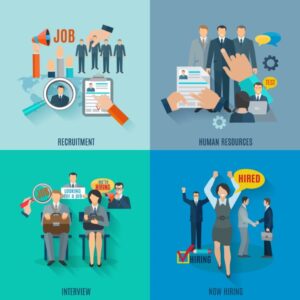
For companies, it allows them to:
Ø recruit and retain qualified employees,
Ø impro
Ø address market changes,
Ø stimulate innovation,
Ø reduce training costs,
Ø etc.
For people, it allows them to
To summarize, while it’s important to note that professional skills are crucial, especially when entering the workforce, but also as an objective foundation of knowledge for subsequent career development, it must also be stated that transversal skills represent a “qualitative” differentiator in expected performance, the means by which one’s professional value is transformed into observable behaviours.
A definition given by an expert in the field, Dr. Stefano Meloni, who is also the author of several books in this field, is that “companies thrive on technical skills, but compete on soft skills.”

And clearly, a company, between two professionals with similar technical or experiential backgrounds, will certainly prefer the one with the personal characteristics that allow them to:
o set goals and motivate themselves to achieve them, while simultaneously motivating others,
o be proactive and results-oriented,
o organize their own activities and coordinate those of other resources with a process-oriented approach,
o negotiate effectively with customers and suppliers,
o etc.

Therefore, developing these types of transferable skills is a fundamental (Source: freepik.com)
investment for anyone aspiring to grow their career and create a positive work environment. As mentioned, many of these characteristics are also personal, but with dedication, commitment, and perseverance, they can be improved. There are several effective methods for strengthening soft skills (e.g., structured training in workshops and specific courses, practical experience in group projects,
personalized support from mentors and coaches, self-learning through books and online resources, and so on).
From what has been said so far, it is clear that both a worker and the unemployed must strive to improve their employability.
This aims to refine and enhance the theoretical, practical, interpersonal, and transversal skills needed for a specific profession and which will help them manage their career.

The success of this type of counseling process is achieved only if the individual feels capable of taking control of their career destiny, making choices, and committing to improvement.
The individual must have self-confidence and know they can take responsibility for their career, including, if necessary, with the assistance of a career counselor who can provide support.
Having clarified these elements, it is now useful to define the meaning of entrepreneurship (which we will address in the next section of this manual) as people can also find employability through self-employment, thus becoming entrepreneurs.