CV & Cover Letter Creation
Let’s now look at how to effectively develop your CV and avoid the most common mistakes.
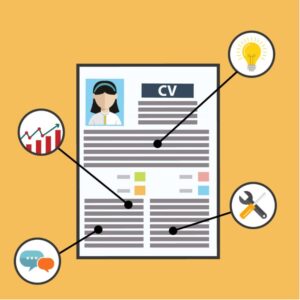
First, it’s important to clarify that an effective CV is one that illustrates all of the candidate’s skills, abilities, and work experience: therefore, it must contain all the information that will attract recruiters’ attention and increase the chances of being selected for an interview.
(Source: freepik.com)
For this purpose, there are various different CV formats that can be used.
Let’s see what they are and which ones to prefer.

Different CV formats
There are different CV formats, each with specific characteristics and advantages. Among the most common are:
1. Chronological CV, a more traditional format, which lists work experience in chronological order, starting with the most recent.
It has the following:
A) advantages:
§ it is easy to read,
§ it shows career progression.
B) disadvantages:
§ it can be difficult for those who have changed jobs frequently or have periods of inactivity.
2. Functional CV, which focuses on the candidate’s skills and abilities, rather than work history.
It has the following:
A) advantages:
§ it is useful for those who have changed jobs frequently or have periods of inactivity,
§ it highlights skills;
B) disadvantages:
§ it can be difficult to read,
§ it does not show career progression.
3. Combined CV, which combines the elements of the chronological and functional CVs, listing work experience and skills.
It has the following:
A) Advantages:
§ It shows career progression and skills;
B) Disadvantages:
§ It can be long and difficult to read.
4. European CV, which is the standardized format used in Europe and which we
recommend because it includes information on education, skills, and work experience.
It has the following:
A) Advantages:
§ It is easy to read and is recognized throughout Europe;
B) Disadvantages:
§ It may be limited for those with non-European work experience.
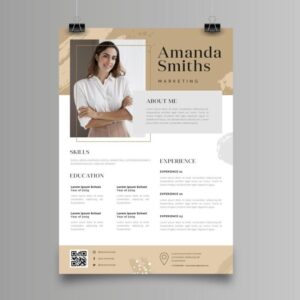
5. Infographic CV, which uses graphs and images to present information in a more creative and visual format.
6.
It has the following:
A) Advantages:
§ It is attractive and easy to read;
§ It shows skills and experience in an innovative way;
B) Disadvantages:
§ It may be difficult to create and not suitable for all sectors.
How to Write a CV and Common Mistakes to Avoid

Even when writing your CV, there are strategies and methodologies you can adopt to make it more attractive and effective.
From our perspective, we recommend:
1. Clearly defining the objectives of your job search and tailoring your CV accordingly;
2. Using a clear, easy-to-read format with clearly defined sections using the Europass format;
3. Include only information relevant to the position you are seeking (irrelevant information often distracts the recruiter’s attention).
4. Use keywords related to the sector and position to help your CV be found by recruiters.
5. Quantifying your previous job achievements, for example, “developed 50 funded European projects.”
6. Correct grammatical and spelling errors to avoid giving a negative impression.
The following mistakes should be avoided:
1. Grammatical and spelling errors that can create a negative impression;
2. Irrelevant information that ca
3. Using confusing or difficult-to-read formats;
4. Lack of personalization to the position being sought;
5. Including false information that can be discovered and damage your reputation, often permanently;
6. Using unprofessional or inappropriate photos.
An effective CV should always include the following information:
Ø Personal information, i.e., personal details and biography,
Ø Work and volunteer experience, starting with the most recent and specifying the duties and positions held within the company as well as the skills developed,
Ø Educational experience, starting with the most recent and indicating the qualifications relevant to the position being applied for,
Ø Languages spoken, including the level of spoken and written proficiency,
Ø Technical and transferable skills and competences relevant to the position being applied for,
Ø Personal interests and hobbies.
Building a CV with AI
In certain cases, using artificial intelligence (AI) to create a CV can also be useful. The advantages include:
1. Time savings, as AI can help you create a CV in just a few minutes, saving you time and effort;
2. Professional format, as AI can create a CV with a professional, easy-to-read format;
(Source freepik.com)
3. Inserting keywords into your CV increases your chances of being found by recruiters;
4. Obtaining suggestions that make your CV more effective;
5. Greater customization of your CV for each type of job and/or company.
At the same time, the indiscriminate and uncontrolled use of AI also produces disadvantages in CV creation, as:
7. A CV created with AI may lack personality and individual style;
8. AI can also make grammatical or spelling errors.
9. AI may not understand the context and specific needs of the industry and position.
10. AI can be addictive and reduce a person’s creative capacity.
11. AI cannot replace human experience and creativity and can often invent experiences that don’t actually exist.
Therefore, while it’s generally better to write your own CV yourself and train yourself to make it truthful, creative, and effective, you could use AI to develop it if you’re truly short on time and want a more professional format. However, you should always remember to carefully proofread the text and edit and adapt it to your actual skills.