
Fallyneets english 4 Sections51 Lessons4 QuizzesLifetime
Emotional Self-Regulation Techniques
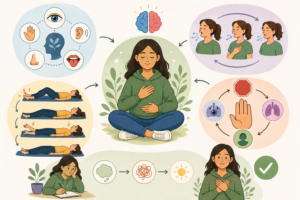
Emotional self-regulation refers to the ability to recognise, understand, and manage emotional reactions in a healthy and constructive way. For NEET youth, developing these skills is essential to deal with stress, frustration, and uncertainty.
The following techniques are simple, practical, and can be applied in daily life, even in high-stress situations.
Grounding Exercises (5-4-3-2-1 Method)
What it is:
A technique that helps bring attention back to the present moment by focusing on the senses. It is especially useful during moments of anxiety or emotional overwhelm.
When to use:
- Feeling anxious or panicked
- Overthinking
- Loss of focus
How to do it (step-by-step):
- Name 5 things you can see
- Name 4 things you can touch
- Name 3 things you can hear
- Name 2 things you can smell
- Name 1 thing you can taste
Example:
A young person feeling anxious before a job interview can use this technique to calm down and regain focus.
Why it works:
It shifts attention away from negative thoughts and reconnects the mind with the present moment.
Breathing Techniques
What it is:
Controlled breathing helps regulate the nervous system and reduce stress responses.
When to use:
- Before stressful situations
- During emotional tension
- When feeling overwhelmed
How to do it (basic technique):
4-4-6 breathing:
- Inhale through the nose for 4 seconds
- Hold for 4 seconds
- Exhale slowly through the mouth for 6 seconds
- Repeat for 2–3 minutes
Example:
Before sending a job application or attending a workshop, this technique helps reduce anxiety.
Why it works:
Slow breathing signals the brain that the body is safe, reducing the “fight or flight” response.
Progressive Muscle Relaxation
What it is:
A technique that involves tensing and relaxing different muscle groups to release physical tension.
When to use:
- Physical stress or tension
- Difficulty sleeping
- After emotionally intense situations
How to do it:
- Start with your feet — tense muscles for 5 seconds
- Release and relax for 10 seconds
- Move up to legs, stomach, arms, shoulders, and face
- Focus on the difference between tension and relaxation
Example:
After a stressful day or frustrating experience, this exercise helps the body return to a relaxed state.
Why it works:
It reduces physical symptoms of stress and increases body awareness.
The “STOP” Emotional Intervention Model
What it is:
A simple mental strategy to interrupt impulsive emotional reactions and respond more consciously.
When to use:
- During conflict
- When feeling anger or frustration
- Before reacting impulsively
How to do it:
- S – Stop
Pause immediately. Do not react.
- T – Take a breath
Use a breathing technique to calm down.
- O – Observe
Notice what you are feeling and thinking.
Ask: “What is happening inside me right now?”
- P – Proceed
Choose how to respond in a calm and constructive way.
Example:
A young person receiving negative feedback may feel angry. Instead of reacting defensively, they use STOP to pause and respond calmly.
Why it works:
It creates a space between emotion and action, allowing better decision-making.
Reflection Tip (for learners)
Try one of these techniques during the week and reflect:
- When did you use it?
- What were you feeling before?
- What changed after?
This helps build awareness and reinforces emotional self-regulation over time.
Key message
Managing emotions does not mean suppressing them.
It means understanding them and choosing how to respond.