
Conceptual Framework
In today’s digital world, social media and online platforms play a central role in how individuals present themselves, communicate, and access opportunities. For young people, especially those not in education, employment, or training (NEET), understanding how to manage their digital presence is essential for both personal development and employability.
This section introduces key concepts related to digital identity, online reputation, and safe use of social networks.

Digital identity definition
Digital identity refers to the way a person is represented online. It includes all the information, content, and interactions associated with an individual across digital platforms.
This may include:
● Social media profiles
● Photos and videos
● Comments and posts
● Usernames and bios
● Online activity and interactions
Digital identity is not only what individuals choose to share, but also what others can see or find about them online.
For NEET youth, digital identity can become a powerful tool to express skills, interests, and personality, especially when traditional work experience may be limited.
Reputation and digital footprint
A digital footprint is the trail of data that individuals leave behind when using the internet. This includes both:
● Active footprint: content intentionally shared (posts, comments, uploads)
● Passive footprint: data collected automatically (likes, browsing behaviour, tags)
Digital reputation is how others perceive a person based on this footprint.
Employers, trainers, and organisations often review online profiles before offering opportunities. A negative or unclear digital presence can limit access to jobs or training, while a well-managed one can create new opportunities.
Positive vs. negative self-presentation
Self-presentation refers to how individuals choose to show themselves online.
Positive self-presentation includes:
● Sharing achievements, skills, or projects
● Using respectful language
● Posting appropriate and constructive content
● Showing authenticity and consistency
Negative self-presentation includes:
● Sharing offensive or inappropriate content
● Posting impulsively or emotionally
● Creating a misleading or inconsistent image
● Engaging in harmful online behaviour
Young people may not always be aware of how their online behaviour is perceived by others. Developing awareness of self-presentation helps them take control of their image and align it with their goals.

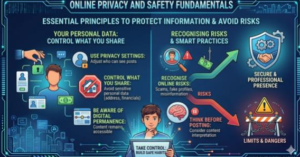
Online privacy and safety fundamentals
Understanding online privacy and safety is essential to protect personal information and avoid risks.
Key principles include:
● Control what you share: avoid sharing sensitive personal data (address, financial information, private details)
● Use privacy settings: adjust who can see posts and personal information
● Be aware of digital permanence: content shared online can remain accessible even if deleted
● Recognise online risks: scams, fake profiles, and misinformation
● Think before posting: consider how content may be interpreted by others
For NEET youth, building safe digital habits is not only about protection, but also about creating a secure and professional online presence.
Key reflection:
Your digital identity is part of your real identity. What you share online can influence how others see you and the opportunities you receive.
Key message
Managing your digital image is not about being perfect. It is about being aware, intentional, and responsible in how you present yourself.